“Reality is the only teacher. If the training isn’t physically demanding, it isn’t martial. If it isn’t precise, it isn’t Taiji. We embrace the hardship of the ‘forge’ to burn away the ego, leaving behind a physically dangerous practitioner, yet fundamentally still.”
The Physical Audit
Martial training is a process of removing lies from the body. Most people move with tension and call it strength, or move with limpness and call it relaxation. Neither is Taijiquan. To reach the “unaltered” state, one must move past theory and into embodiment.
The following principles are not suggestions; they are the mechanical requirements of the art.
1. The Open Hip (Kua)
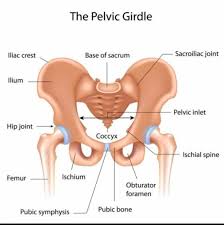
Opening the hip is one of the most difficult requirements in Taijiquan. Without an open hip, there is no steering; without steering, there is no power.
In our lineage, we do not simply “turn the waist.” We operate the hips as two distinct yet synchronized engines:
- The Weighted Side (Steering): The side holding slightly more of the weight acts as the axis. It must stay open to steer the incoming force into the ground. If this hip locks, you become a “static target” and will be bullied by superior force.
- The Sunk Side (Power): Power is created in the void. By sinking the hip on the non-weighted side, you create a pressurized rotation.
The Embodiment: One hip rotates inward while the other rotates outward. This counter-rotation is the source of the “spiraling” power that Hong Junsheng decoded over 15 years in Beijing.
2. Sink and Turn
This is the distilled essence of the art. It is the answer provided by Master Liu ChengDe when asked to define Taiji.
- Sink: This is the health requirement. Sinking the hip decompressses the spine and restores the lower back. It is how Liu healed his own body.
- Turn: This is the martial requirement. The turn is not a twist of the shoulders; it is a rotation of the center made possible only by the open hips.
When these two are unified, you have the “stability that cannot be moved.”
3. No Empty Postures
In 1956, Chen Fa-ke confirmed that in this stream, there are no empty postures.
- If a movement has no martial application, it is empty.
- If a movement has no health benefit, it is empty.
- If the hip is closed, the posture is empty.
To train “martially” means to ensure that every posture can withstand a partner’s weight. To train “peacefully” means to do so without the ego-driven tension that leads to a desire to ‘win’.
4. The Calm of Capability
We do not seek a “Zen aura” through imagination. We seek it through Mechanical Efficiency.
A man who cannot open his hips must struggle, pant, and fight to move an opponent. A man who has embodied these principles moves with the calm of a machine because he is no longer fighting himself. He is dangerous because he is efficient; he is peaceful because he is certain.
“Can you do it?” — Master Liu ChengDe