
Many people claim Hong Junsheng as their teacher. The line from Chen Fa-ke through Hong has commercial value, and commercial value attracts claimants. What it less often attracts is practitioners capable of doing what Hong actually did.
Master Liu ChengDe is the exception. In my direct experience — and in the assessment of those who have worked with both — he is the disciple of Hong's who continues to transmit the internal mechanics of the art, not merely the outer shape of it. The difference is not subtle. You can feel it in the first touch.
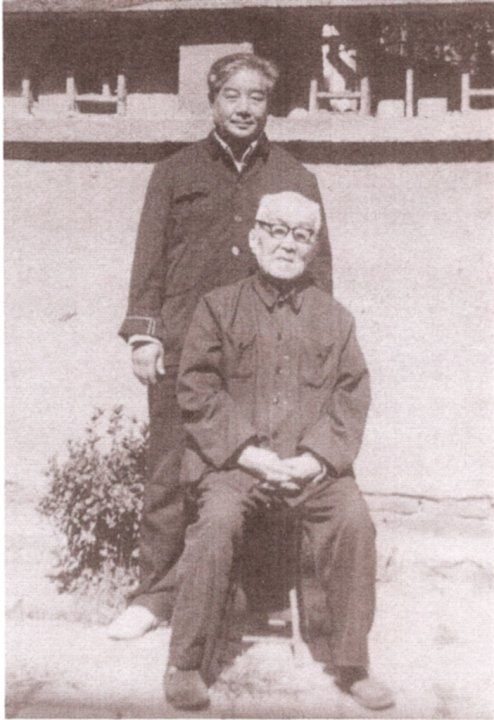
The Man
Liu is short and wide, built like a weightlifter rather than a bodybuilder. Thighs like tree trunks. An enormous back. A man who could, if he chose, simply press you into the ground. He does not choose to. His touch, when he works with a student, is the lightest imaginable. You understand immediately that the strength is there, and that it is being deliberately set aside. That is what the art is supposed to look like.
With serious students he is warm, patient, and often unusually generous. He treated me very well. I have also heard, and do not doubt, rougher stories about him. He has no patience for fraudulent lineage claims, and the consequences of pressing such claims in his presence have on at least one occasion been immediate and physical. Both sides of this are consistent. A teacher who protects the line must be able to turn away from it as well as toward it.
What He Teaches
The core of Liu's teaching, as I received it, is the understanding that both sides of the hip are always open, but with a difference in rotation: one hip rotates inward, and the other outward. The weighted side is where steering happens. The sunk side is where power is created. This sounds simple in writing. It is not simple in the body. Years of correction are required to produce it reliably, and most students never receive the correction at all because most teachers cannot give it.
What I Received in Jinan
I had come to Jinan having practiced Circles for years under a previous teacher, one who had never fully explained what Circles were supposed to be. They were taught differently from one session to the next, without reason given. When asked, the answer amounted to: accept it and shut up. I had tried, so far as I knew, every reasonable variation on my own.
Liu placed his hands on my hip and kua and guided me through one rotation. With his guidance ensuring that I was doing it in a detailed manner, I could not finish it. I fell down about three-quarters of the way through. Later, with help from one of his students, I managed several. But it was a far cry from having absorbed them into the body. The hand motion he showed me was exact — no guesswork. It was a simple motion, and it had entirely escaped me. Many small changes added up to changing the nature of the movement completely.
At his urging, his students then showed me a Push Hands pattern I had never seen. The lower body motion alone gave me trouble, and made it plain that however hard I had worked, it had not been enough. The hand movement was built on a Negative Circle and inverted most of what I had been expecting. I left with a concrete goal, and a way to get there.
During one of our workouts on the mountain, Liu stepped aside to show us the effect of focusing his Qi onto his palm. He held out a normal hand. Then, without apparent effort, he engorged it. It became red and swollen. Then he changed it back. He said this was a small example of what could be done, and that any true Master should be able to do it. I report this without embellishment. I was there.
He also said, around that time, something I have returned to often since:
This threads directly into Hong's position that Taiji done correctly is itself Qi Gong. Liu's version is sharper: the meridians are not an optional overlay on the mechanics. They are part of the work.
He also took time to teach me a Qi Gong set from his rarely-used studio, a set he almost never gives to his own students. And he taught me the Si Shi Er — the 42 form (四十二式). This is not to be confused with the 1989 composite competition form of the same number. Liu's 42 is something else entirely: a reconstruction, drawn from his own memory, of the pure Chen Fa-ke Yi Lu as he and Hong had practiced it before Hong received permission to alter the Yi Lu slightly. It contains elements from Chen Fa-ke, from Hong's adjustments, and from Liu's own realizations across more than sixty years of practice. Practical, real, and completely internal — unlike a great deal of what is taught under the name of Chen Taiji today.
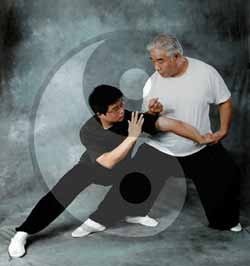
The Standard
The test of a teacher is not charisma, title, or tournament record. The test is whether the student, after years of work, can do the thing. Liu produces students who can do the thing. That is the only standard that finally matters, and it is the standard by which this entire site is organized.